
Pulpo a la Gallega con Pimentón y Aceite is one of those dishes I make when I want something that feels special, but I do not want to spend the whole day cooking. You know the vibe: friends coming over, a bottle of something cold on the table, and you want a plate that makes everyone go quiet for a second after the first bite. This is that plate. It is simple, bold, and super satisfying when you get the octopus tender and the oil and paprika just right. If you have ever ordered it at a Spanish bar and thought, “I could never do this at home,” I promise you can. 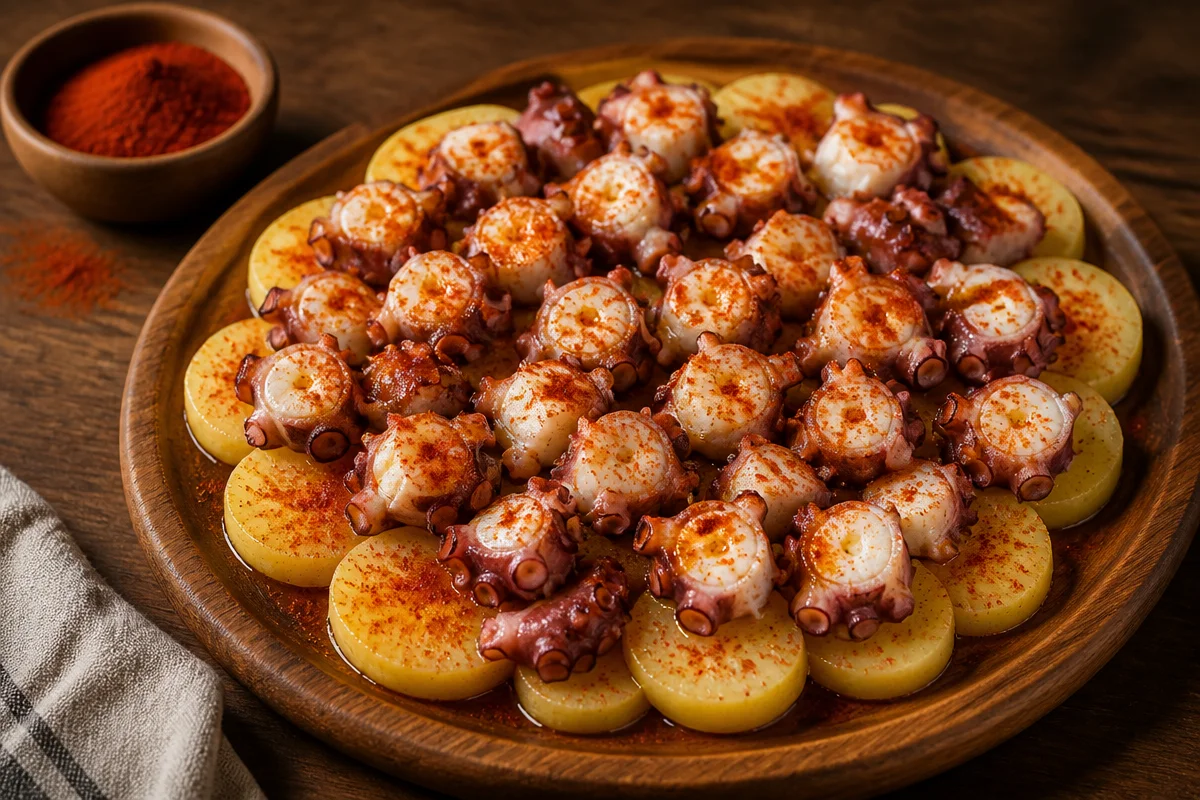
Cómo se prepara el pulpo a la gallega?
Let us break it down in plain language. Pulpo a la Gallega con Pimentón y Aceite is basically tender octopus served over potatoes, then finished with good olive oil, paprika, and salt. That is it. Because the ingredient list is short, each thing matters a lot.
The classic way is to simmer the octopus until it turns soft, slice it, and layer it on top of warm potato rounds. Then you drizzle olive oil like you mean it, dust with pimentón (Spanish paprika), and finish with flaky salt. When it is done right, you get silky octopus, creamy potatoes, and that smoky paprika perfume in every bite.
I learned the “feel” of this dish after a trip where I basically ordered it whenever I saw it on a menu. Back home, it took me a couple tries to stop overcooking the potatoes and undercooking the octopus. Once I got the timing down, it became one of my favorite “I want to impress but keep it chill” recipes.
If you want to go deeper into the traditional version and the history behind it, I also like this write up: Pulpo a la Gallega un clásico de la cocina española. It is a nice companion read when you are planning a Spanish style meal night.
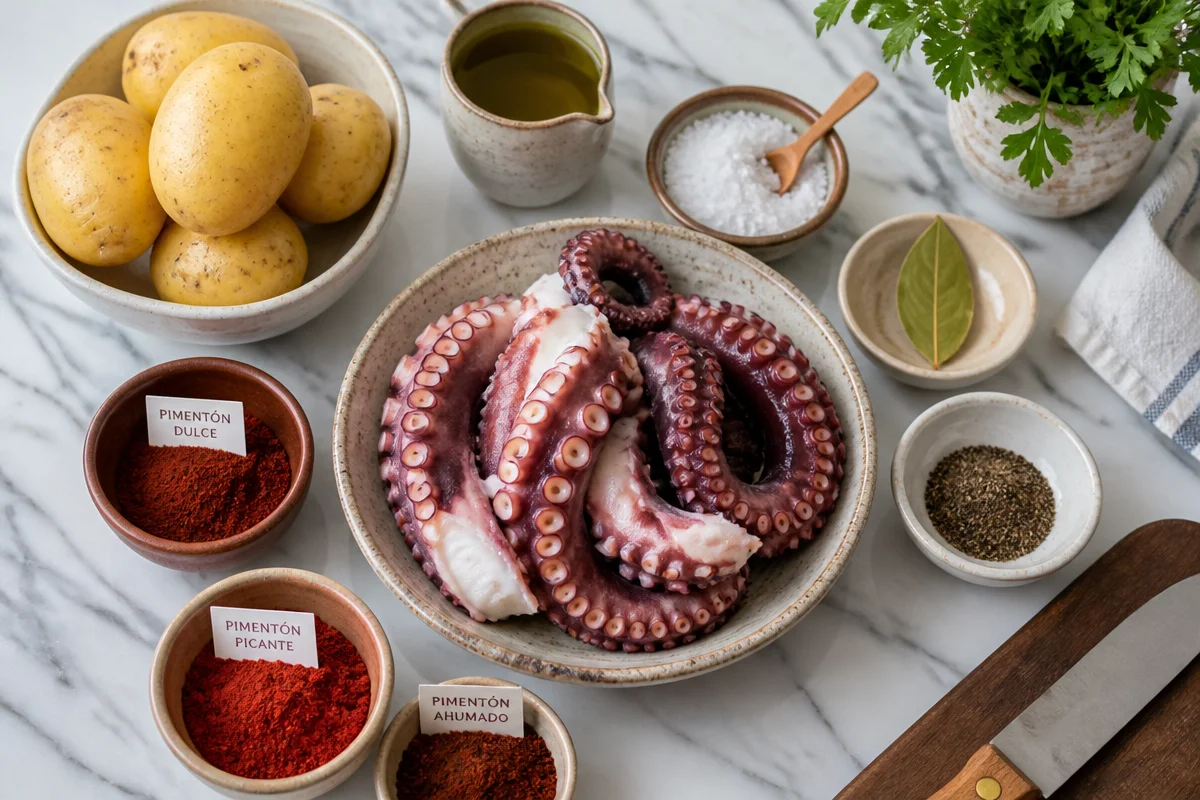
Pasos para preparar el mejor pulpo a la gallega
This is the part where I keep things practical. Here is what I use and the way I do it at home. No chef talk, just what works.
What you will need
- Octopus (about 2 to 3 pounds). Fresh or frozen both work, and frozen is honestly convenient.
- Potatoes (Yukon gold style is great), 3 to 4 medium
- Extra virgin olive oil, the good stuff if you can
- Pimentón (sweet, smoked, or a mix). Smoked is my favorite.
- Flaky salt or coarse sea salt
- Optional: a bay leaf for the water, and a little black pepper
Step by step directions
1) Cook the octopus. Fill a big pot with water. Add a bay leaf if you want. Bring it to a gentle boil. If your octopus is frozen, thaw it in the fridge first if you can, but I have done it from partially thawed and survived. Simmer until tender. Time depends on size, but think around 35 to 55 minutes. Start checking around the 30 minute mark by poking the thickest part with a knife. You want it to slide in with little resistance.
2) Rest it. Turn off the heat and let the octopus sit in the warm water for 10 minutes. This helps it relax and stay juicy.
3) Cook the potatoes. While the octopus cooks, boil potatoes (whole or cut in half) in salted water until tender. Drain and let them steam dry for a minute so they are not watery. Slice into thick rounds.
4) Slice the octopus. Cut tentacles into bite size coins. I like slightly thick slices because they feel meatier and do not dry out as fast.
5) Assemble. On a wooden board or serving platter, lay the warm potato rounds first, then the octopus on top.
6) Season like you mean it. Drizzle extra virgin olive oil generously. Sprinkle pimentón over everything. Finish with flaky salt. Taste and adjust. The final bite should taste of octopus, olive oil, and paprika all at once.
When I serve Pulpo a la Gallega con Pimentón y Aceite, I keep it simple: bread on the side, maybe a green salad, and something bubbly to drink. If you want another cozy Spanish dish idea for the same kind of night, check out Alubias con almejas un plato reconfortante y delicioso. It is comforting in a totally different way, but it fits the theme.
;
Algunos trucos para que tu pulpo a la gallega sea un éxito
This dish is not hard, but a few little tricks make it go from “pretty good” to “wow, where did you learn this?”
Use frozen octopus if you are nervous. Freezing helps break down fibers, so you are more likely to get that tender texture. A lot of home cooks get better results with frozen than with fresh.
Do not crank the heat. A hard boil can make the outside tighten up. Keep it at a gentle simmer. Calm cooking equals tender octopus.
Season at the end. Paprika can taste bitter if it gets cooked too much. You want it fresh on top, mixing with the warm oil and potatoes.
Pick your paprika on purpose. Sweet pimentón gives warmth. Smoked gives that Spanish bar flavor. If you like a tiny kick, you can add a pinch of spicy, but do not overdo it.
Salt in layers. Salt the potato water, then finish the final plate with flaky salt. It makes each bite pop.
“I made this for my family and they could not believe it was homemade. The potatoes soaked up the olive oil and paprika, and the octopus was actually tender. Total win.”
If you love playing around with Spanish flavors, I have another fun page you might enjoy for variety ideas: Gachas manchegas, ensalada de pulpo y más delicias españolas. It is great when you are planning a little spread.
Cómo limpiar el pulpo
If you buy octopus already cleaned, you can skip most of this. Many grocery stores sell it ready to cook, especially frozen. But if you end up with a whole octopus and it looks intimidating, here is the simple version.
Rinse it well. Rinse under cold water and rub gently to remove any slippery residue.
Remove the beak. Flip it over where the tentacles meet. You will find a hard “beak” in the center. Push it out and pull it away.
Clean the head pouch. If it is not already cleaned, you may need to empty the head. Turn it inside out carefully, rinse, and clean it out. Some people trim extra bits, but you do not have to be obsessive.
Eyes and tough bits. If the eyes are still there and you want them gone, you can cut around them. Many cleaned octopus pieces will not include these parts anyway.
After cleaning, you are basically ready to cook. And remember, Pulpo a la Gallega con Pimentón y Aceite is all about tender cooking and a confident finish with oil and paprika. The cleaning part looks scarier than it is.
Lo más leído sobre Pulpo a la Gallega {video_youtube}
Whenever I post anything about octopus, people always ask the same things, so I am putting the most popular notes right here.
People want to know if it is chewy. It should not be. A little bite is normal, but it should not feel like rubber. If it is tough, it usually just needs more simmer time.
People wonder if they can do it ahead. Yes. You can cook the octopus earlier, then slice and warm it gently before serving. Same with potatoes. Just do the paprika and olive oil right before you eat.
People ask what makes it taste like the restaurant. Two things: using enough olive oil, and using real pimentón that smells smoky and fresh. Also, serving it warm, not cold.
Common Questions
Can I make Pulpo a la Gallega con Pimentón y Aceite with pre cooked octopus?
Yes. Warm it gently in hot water or steam it for a few minutes, then slice and season as usual. Do not overheat it or it can turn dry.
What potatoes work best?
Waxy potatoes that hold their shape are easiest. Yukon gold style is my go to because they get creamy without falling apart.
How do I know when the octopus is done?
Poke the thickest part of a tentacle with a knife. If it slides in easily, you are good. If it fights back, keep simmering and check again in 5 to 10 minutes.
Can I use regular paprika instead of pimentón?
You can, but it will taste different. If you can grab Spanish smoked paprika, it is worth it for that classic flavor.
Is it better to slice the octopus thick or thin?
Totally personal. I like medium thick slices so they stay juicy. Thin slices look pretty but can cool off faster.
A cozy final note before you cook
If you take one thing from this post, let it be this: keep the simmer gentle, and do not be shy with olive oil, pimentón, and flaky salt. That is the magic of Pulpo a la Gallega con Pimentón y Aceite, and it is why the dish feels so iconic with such a short ingredient list. If you want to compare methods, I like reading Pulpo a la Gallega: MEJOR Receta tradicional, and for a fun presentation idea, this one is a cool rabbit hole: Torre de pulpo a la gallega – Blue jellybeans – WordPress.com. Now do yourself a favor, put on some music, cook it once, and see how fast it becomes your new “I can not believe I made this” dish.
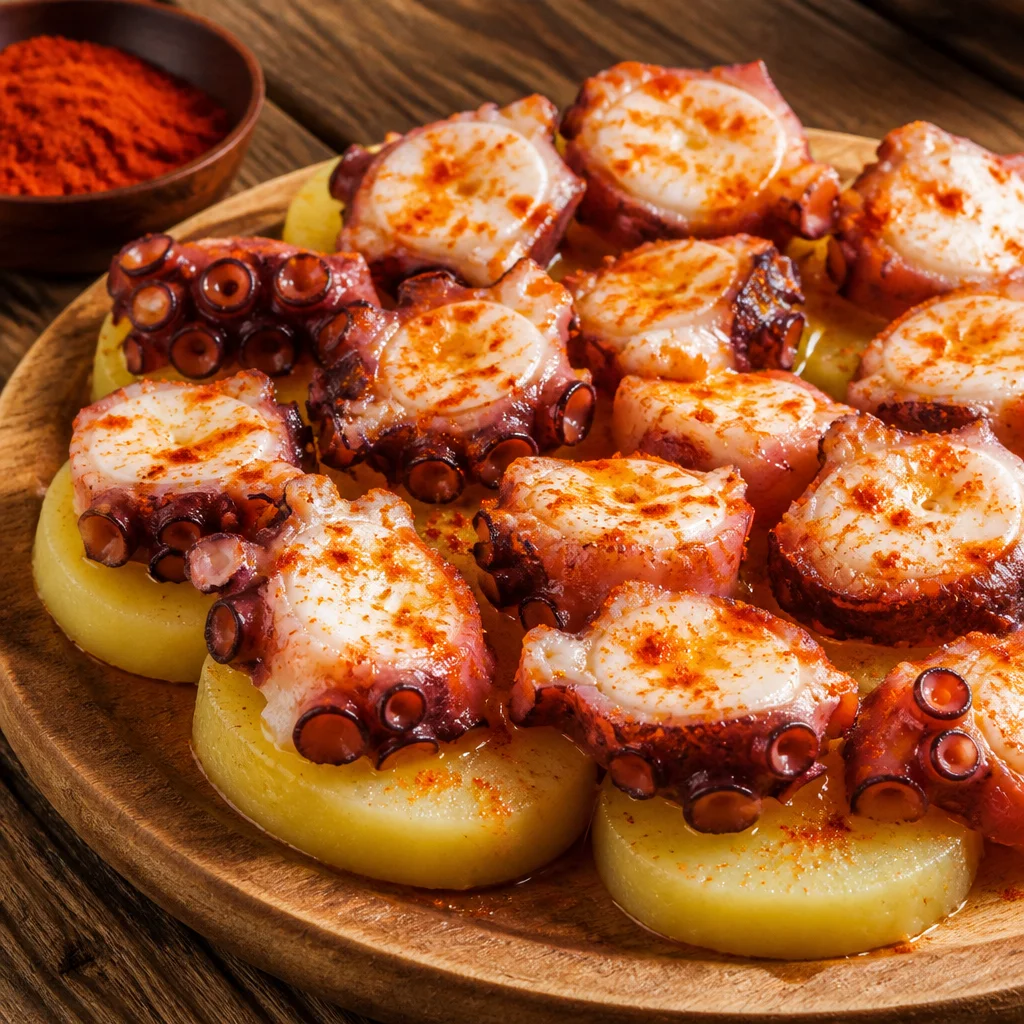
Pulpo a la Gallega
Ingredients
Method
- Llena una olla grande con agua. Si deseas, agrega una hoja de laurel. Lleva a ebullición suave.
- Si el pulpo está congelado, descongélalo en el refrigerador primero. Cocina a fuego lento hasta que esté tierno, aproximadamente de 35 a 55 minutos.
- Verifica la cocción pinchando la parte más gruesa; el cuchillo debe entrar con poca resistencia.
- Apaga el fuego y deja reposar el pulpo en el agua caliente durante 10 minutos.
- Mientras el pulpo se cocina, hierve las papas en agua con sal hasta que estén tiernas. Escurre y deja reposar para que se sequen.
- Corta las papas en rodajas gruesas.
- Corta los tentáculos del pulpo en trozos del tamaño de un bocado.
- En una tabla o fuente, coloca primero las rodajas de papa y luego el pulpo encima.
- Rocía generosamente con aceite de oliva y espolvorea el pimentón y la sal escamosa. Prueba y ajusta los condimentos.
Notes
Pulpo a la Gallega
Ingredients
Method
- Llenar una olla grande con agua. Si se desea, agregar una hoja de laurel. Llevar a ebullición suave.
- Si el pulpo está congelado, descongelar en el refrigerador. Cocer a fuego lento hasta que esté tierno (entre 35 a 55 minutos). Comenzar a verificar a los 30 minutos.
- Apagar el fuego y dejar reposar el pulpo en el agua caliente durante 10 minutos.
- Mientras el pulpo se cuece, hervir las papas enteras o cortadas por la mitad en agua salada hasta que estén tiernas. Escurrir y dejar que se evapore el exceso de agua antes de cortarlas en rodajas gruesas.
- Cortar los tentáculos del pulpo en rodajas de bocado.
- Colocar las rodajas de papa en una tabla de madera o fuente de servir, y encima poner el pulpo.
- Aderezar generosamente con aceite de oliva y espolvorear con pimentón y sal al gusto.