
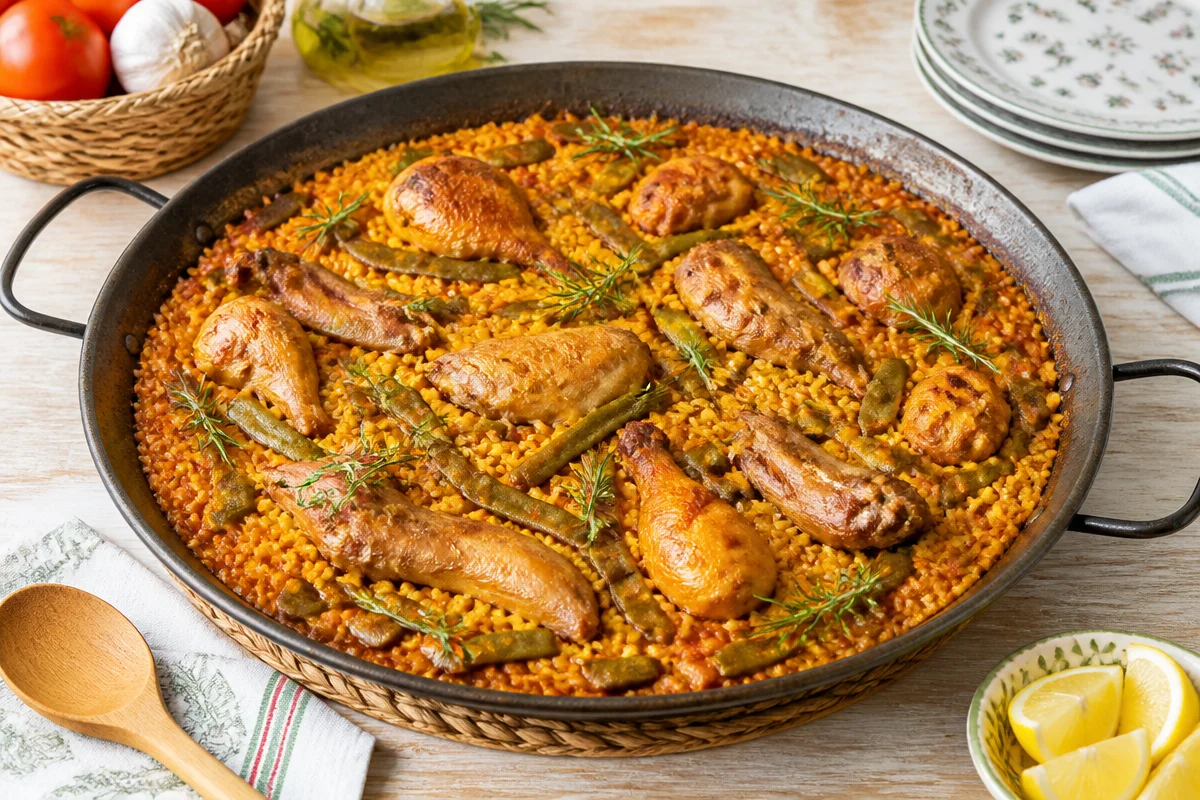
Paella Valenciana Auténtica con Pollo y Conejo is one of those dishes I used to think was only worth ordering in a restaurant, because who has the patience at home, right? Then I tried making it on a lazy weekend, and I realized the real secret is not fancy skills, it is just doing a few simple things in the right order. If you have ever ended up with soggy rice, bland flavor, or a pan that looks like a burnt crime scene, you are not alone. I have been there, scraping the bottom and pretending it was all planned. Today I am walking you through how I make this classic at home, in a way that feels doable and actually fun.
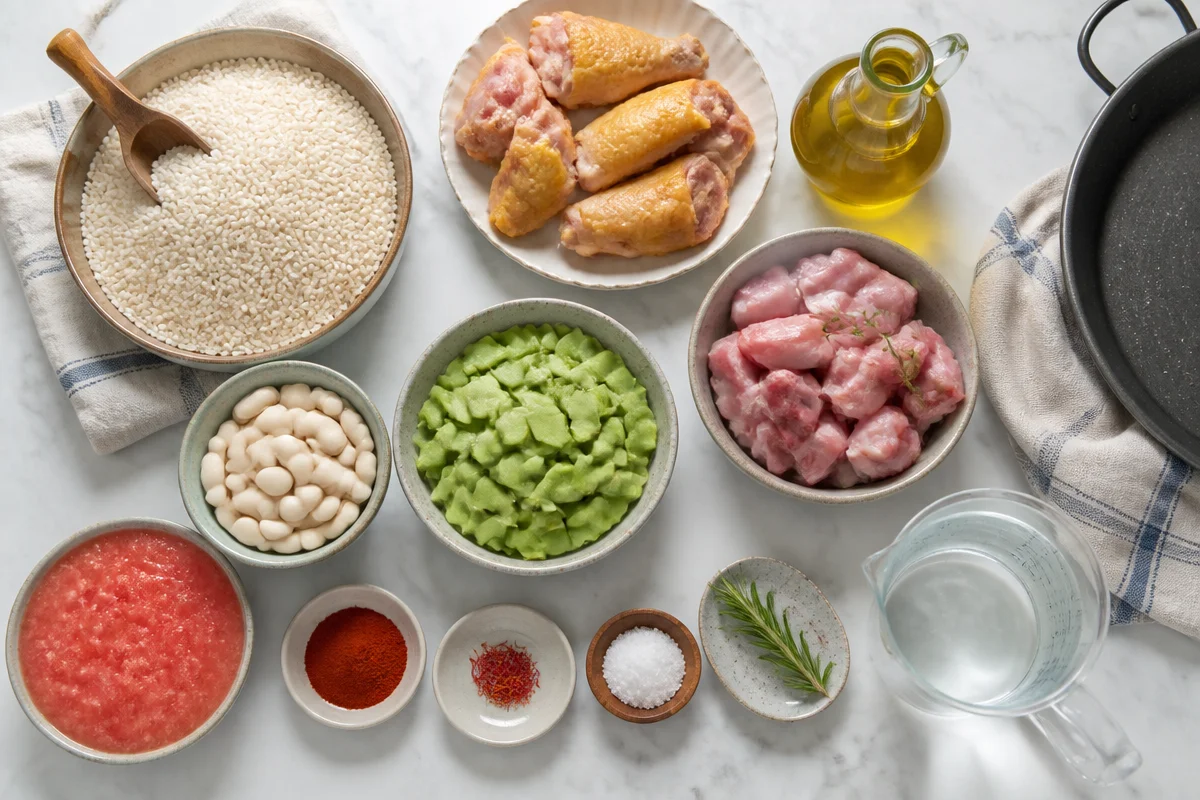
Ingredientes para paella valenciana
Let us talk about the stuff that matters. When people say Paella Valenciana Auténtica con Pollo y Conejo is simple, they mean the ingredient list is not huge, but each piece has a job. You do not need random add ons. You need good basics and a little patience.
Here is what I use for a home sized pan that feeds about 4 hungry people:
- Rice: Short grain like bomba is ideal, but other short grain Spanish style rice works too.
- Chicken: Bone in pieces are best for flavor.
- Rabbit: Chopped into serving pieces.
- Olive oil: Do not skimp, it is part of the flavor base.
- Green beans: Flat green beans are traditional if you can find them.
- Garrofón beans: Big white beans typical in Valencia. If you cannot find them, use large lima beans.
- Tomato: Grated or finely crushed.
- Sweet paprika: Gives warmth and color.
- Saffron: A few threads, or a good saffron infusion if you have it.
- Rosemary: A small sprig can be lovely, but do not overdo it.
- Water or light broth: Traditional versions often use water and build flavor in the pan.
- Salt
A quick note on rabbit: if it feels intimidating, you are not weird. The first time I cooked it, I kept checking recipes like I was taking an exam. If you want a cozier warm up before you jump into paella, this conejo al ajillo is a really friendly way to get comfortable with rabbit at home.
;
And one more small thing that helps a lot: pick a wide pan. More surface area means better evaporation and a better chance at that magical bottom layer.
Cmo hacer paella valenciana
This is the part where people get nervous, but I promise it is mostly about not rushing. Paella Valenciana Auténtica con Pollo y Conejo is built in layers, and each layer tastes like something. If you rush the early steps, the rice cannot save you later.
Step by step, the way I do it
1) Brown the meats first.
Heat your pan, add olive oil, and brown the chicken and rabbit slowly. You are not just cooking them, you are creating the flavor base. I like a deep golden color on the edges. Season with salt as you go.
2) Add the green beans and sauté.
Toss in the green beans and let them cook for a few minutes in that flavorful oil. This is where it starts smelling like you are doing something very right.
3) Add tomato, then paprika.
Push the meat and beans aside a bit, add grated tomato and cook it down until it looks jammy. Then add sweet paprika, but stir fast so it does not burn. Burnt paprika tastes bitter and it can mess up the whole pan.
4) Add water and simmer to build the broth.
Pour in water, scrape up the browned bits, and let it simmer. This is where the liquid becomes your cooking broth. If you are using garrofón or lima beans, add them now.
5) Taste the liquid like it is soup.
Before the rice goes in, taste and adjust salt. This is your only real chance to fix the seasoning easily. If the liquid tastes a little flat now, the rice will taste flat later.
6) Add rice and do not stir anymore.
Spread the rice evenly across the pan. From this point on, I leave it alone. I might gently shake the pan once, but no stirring. That is how you keep the texture right.
7) Add saffron and finish cooking.
Add saffron threads (or infusion) and keep the heat steady. At first you want a stronger simmer, then lower it so it finishes gently. If you like rosemary, add a small sprig near the end and remove it once it smells nice.
8) Rest, then serve.
When the liquid is absorbed and the rice looks done, turn off the heat and let it rest for about 5 to 10 minutes. This little rest is what makes it feel finished instead of messy.
If you want a deeper dive into the roots and what makes it traditional, I like this Spanish page a lot: saborea los sabores de España con paella valenciana. It is a nice read when you are in that mood where you want the story behind the dish.
One more real life tip: control the heat, not the clock. Your stove and pan decide the timing more than any recipe does.
“I tried your method and for the first time my rice was actually separate, not sticky. The flavor from the chicken and rabbit was unreal, and the bottom had that little toasted bite I always wanted. My family went quiet while eating, which is the biggest compliment in my house.”
Con qu acompaar la paella valenciana
I am a big fan of not overcomplicating the sides. Paella Valenciana Auténtica con Pollo y Conejo already brings rice, meat, and veggies to the table, so you just want simple things that keep it feeling light.
Here are my go to pairings:
- Simple salad with lettuce, tomatoes, and a quick olive oil and vinegar dressing.
- Lemon wedges for anyone who likes a bright squeeze on top.
- Crusty bread if you want something to nibble while the paella rests.
- Olives or a small plate of roasted peppers.
For drinks, I keep it easy. Sparkling water with lemon is great. A chilled white wine also works if that is your vibe. And if you want another cozy Spanish style dish for a different day, I have been craving this one lately: alubias con almejas. It is totally different, but it has that same comforting, homey feel.
Tipos de paella y variaciones
So here is where I get honest: people call a lot of things paella. Some are delicious, some are chaos, and some are more like rice casserole. But if you are aiming for Paella Valenciana Auténtica con Pollo y Conejo, it helps to know what is traditional and what is a variation.
Common types you might run into:
Seafood paella: Usually shrimp, mussels, squid, and fish stock. Tasty, but not the Valencian chicken and rabbit classic.
Mixed paella: Meat plus seafood together. Popular in many places, not the traditional Valencian style.
Vegetable paella: Great for a lighter option, but again, different category.
Home friendly variations that still respect the spirit:
If you cannot find garrofón, use large lima beans. If you cannot find flat green beans, use regular green beans. If rabbit is impossible in your area, you can make it with just chicken, but the flavor will be different. I still think the rabbit is worth seeking out at least once because it is part of what makes Paella Valenciana Auténtica con Pollo y Conejo taste like the real thing.
Consejos para perfeccionar la paella
This is the section I wish I had when I started. These small tips save you from the most common heartbreaks.
My practical do this, not that list
Use a wide pan so the rice cooks evenly. If it is piled up too deep, it turns heavy and uneven.
Do not stir after the rice goes in. Stirring makes it creamy. That is great for risotto, not what you want here.
Taste the cooking liquid before adding rice. Seasoning fixes are easy at the broth stage and annoying later.
Watch the heat. Too high the whole time dries it out. Too low the whole time makes it gummy. Start stronger, then ease off.
Let it rest. Resting is not optional in my kitchen. It finishes the texture.
And yes, the famous toasted bottom is real. If you want a little more color at the end, you can raise the heat briefly for the final minute or two. Just stay close. It goes from perfect to burnt fast.
The funny thing is that once you make it a couple times, it stops feeling scary and starts feeling like a weekend ritual. That is when Paella Valenciana Auténtica con Pollo y Conejo really becomes your dish, not just a recipe you copied.
Common Questions
Can I use broth instead of water?
Yes, but keep it light. A strong broth can cover up the flavor you build from the chicken and rabbit. I often use water because the pan creates its own rich cooking liquid.
What rice is best if I cannot find bomba?
Look for any short grain rice meant for paella, or another short grain that holds its shape. Avoid quick cook rice. It gets mushy fast.
How do I know the rice is done without stirring?
Taste a few grains from different spots near the end. If it is tender with a tiny bite, you are good. If the center is hard, add a small splash of hot water and give it a few more minutes.
Can I make it ahead of time?
You can, but it is best fresh. If you need to prep, chop everything ahead and measure your ingredients so cooking feels easy.
Do I really need rabbit?
If you want the most classic flavor, yes. If you cannot get it, use chicken only and focus on browning it well so you still build a strong base.
A cozy final nudge to try it this weekend
If you take anything from my kitchen ramble today, let it be this: build flavor early, season the liquid, and do not stir once the rice goes in. Those three habits make Paella Valenciana Auténtica con Pollo y Conejo feel way more achievable at home. If you want to see how others present it, I love browsing Paella valenciana de pollo y conejo – Tono Food Photo for inspiration, and I also find the notes on tradition helpful in Paella valenciana: la receta tradicional – Directo al Paladar. Give it a try when you have a calm afternoon, and let your kitchen smell like something special for once.
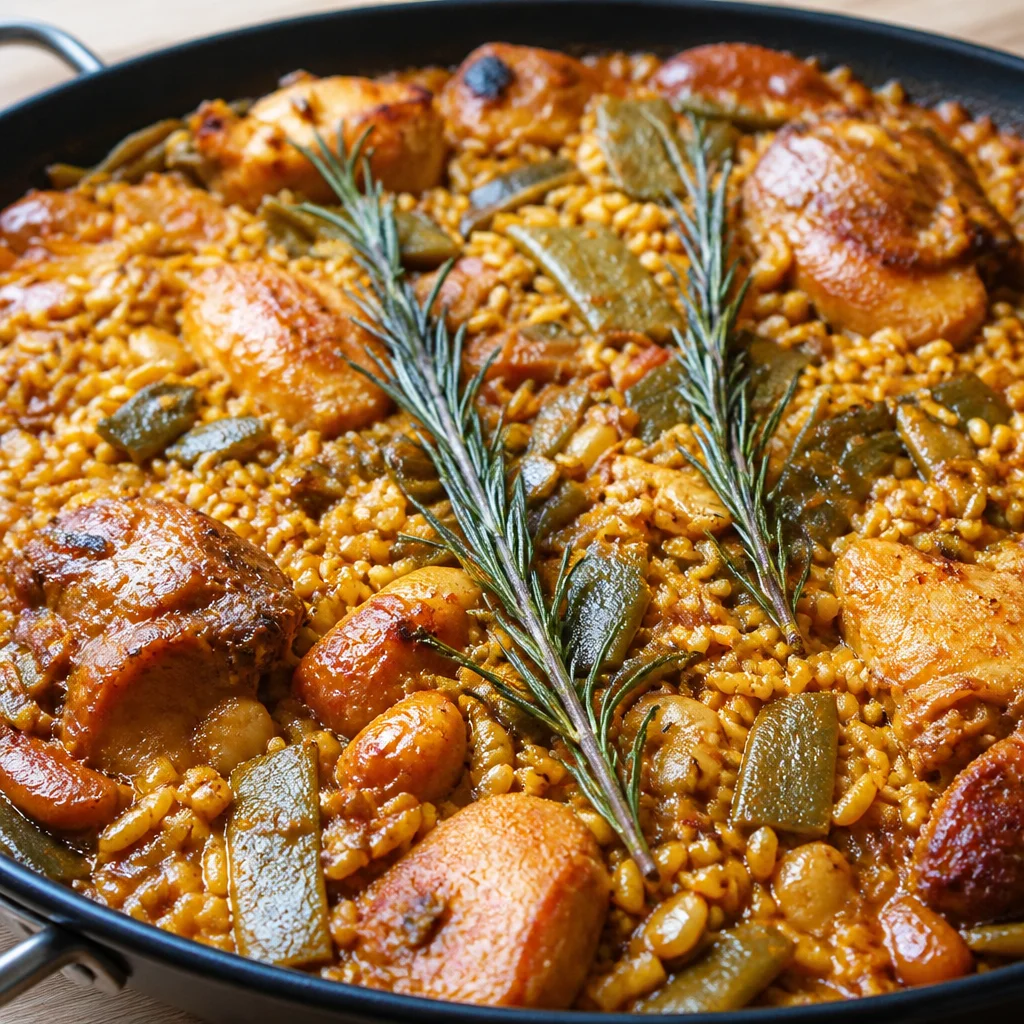
Paella Valenciana Auténtica con Pollo y Conejo
Ingredients
Method
- Heat a wide pan and add olive oil. Brown the chicken and rabbit slowly, seasoning with salt until golden.
- Add green beans and sauté until fragrant.
- Push aside the meats and add the grated tomato. Cook down until jammy, then stir in the sweet paprika quickly to avoid burning.
- Pour in water, scrape the browned bits, and let it simmer to build the broth. Add garrofón or lima beans if using.
- Taste the liquid and adjust salt as necessary before adding the rice.
- Spread the rice evenly across the pan. Do not stir from this point on.
- Add saffron threads and keep the heat steady. Start with a strong simmer, then reduce for gentle cooking.
- Once the liquid is absorbed and the rice looks done, turn off the heat and let it rest for 5-10 minutes.