
Cocido Madrileño Tradicional Paso a Paso is the kind of meal you crave when it’s cold outside and you want something that feels like a warm blanket. Maybe you’ve tried it in a restaurant and thought, “No way I can pull that off at home.” I get it, it looks like a lot. But once you break it down, it’s honestly just good ingredients, a big pot, and a little patience. I’m going to walk you through it like I’d do with a friend in my kitchen, with simple steps and a few tricks I’ve learned the hard way. 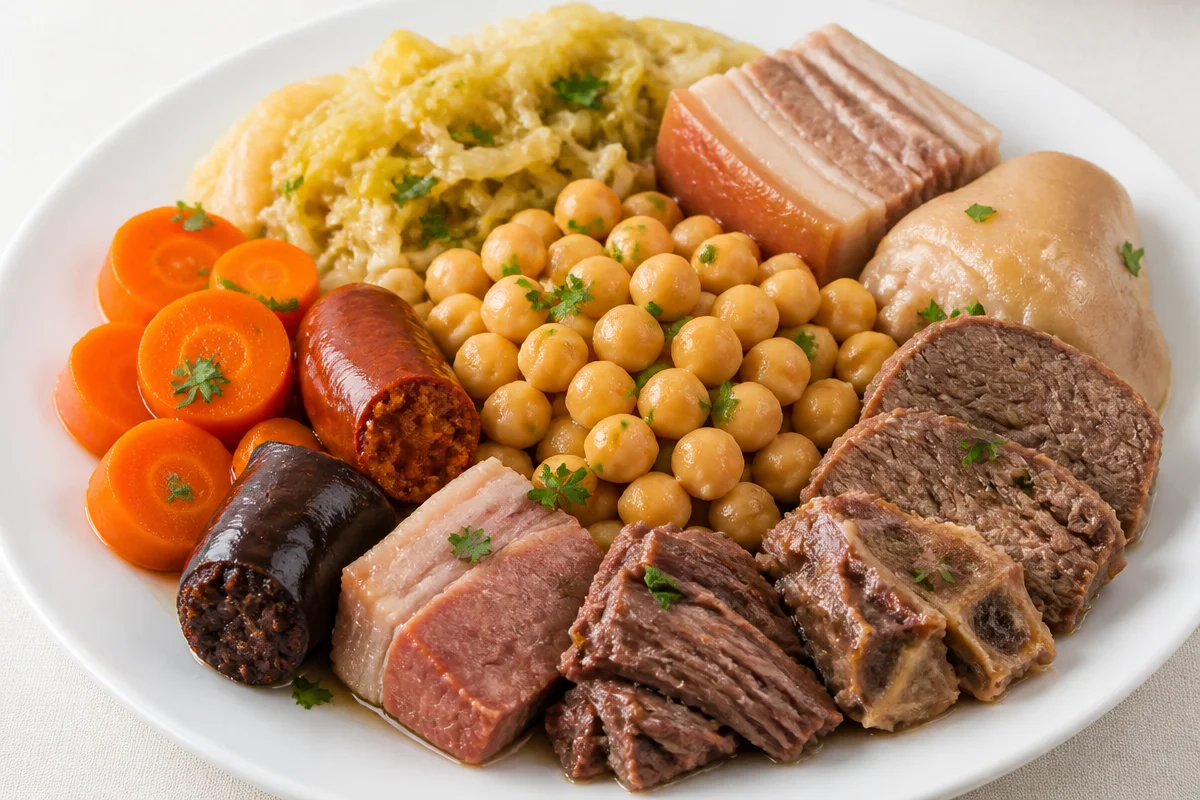
Receta de cocido madrileo
This is the cozy classic that Madrid is proud of, and for good reason. Cocido Madrileño Tradicional Paso a Paso isn’t about fancy techniques. It’s about building a rich broth, getting chickpeas tender, and ending up with a full meal that basically feeds everyone twice.
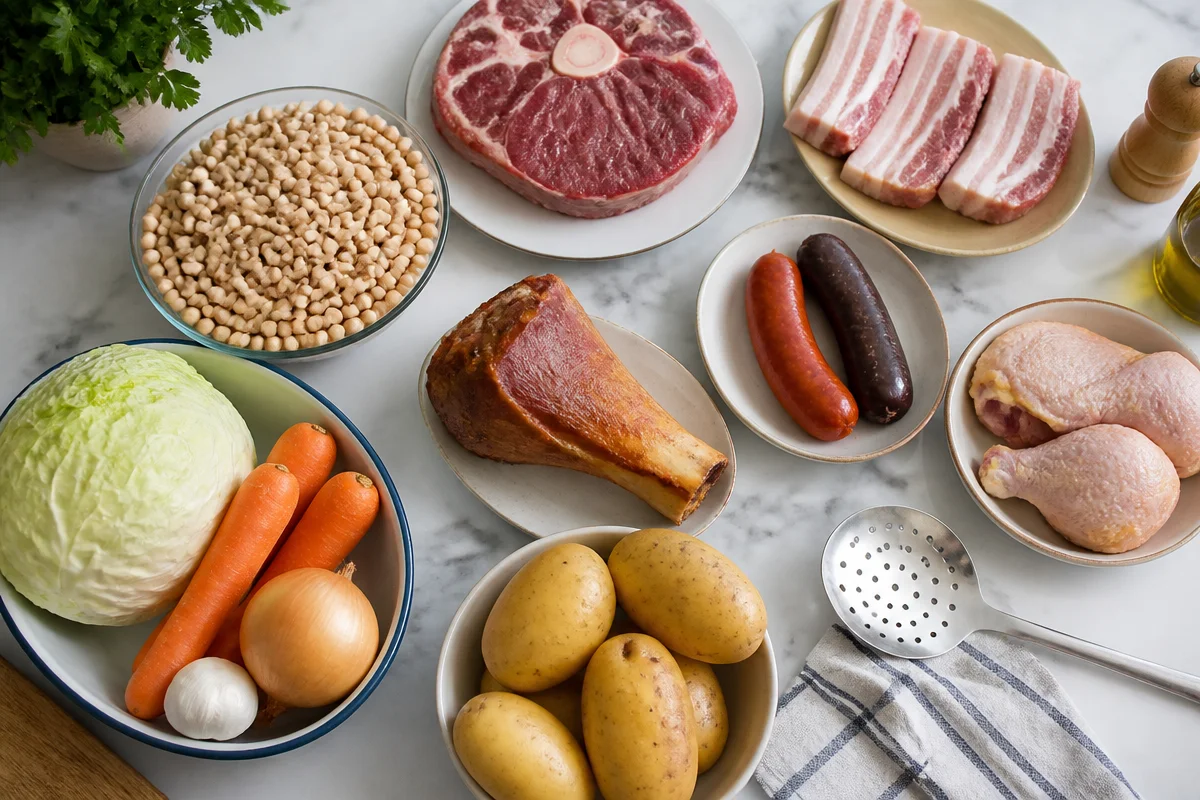
Ingredients you will need
I’m keeping this list realistic. You can tweak meats a bit depending on what you find, but try to keep the spirit of it.
- Dried chickpeas (about 400 to 500 g), soaked overnight
- Beef for simmering (shank or brisket, about 300 to 400 g)
- Pork (pork belly or fresh bacon, about 200 g)
- Chorizo (1 or 2 links)
- Morcilla blood sausage (1 link, optional but very traditional)
- Ham bone or a chunk of cured ham (for flavor)
- Chicken (a thigh or half a small chicken)
- Potatoes (2 to 3 medium)
- Carrots (2)
- Cabbage (half a small one)
- Onion (1)
- Garlic (2 cloves)
- Salt (go easy at first because the ham is salty)
- Olive oil (for the cabbage finish)
Quick side note: if you like Spanish seafood too, one of my other cozy favorites is this traditional conger eel in garlic sauce recipe. Totally different vibe, but also very “big flavors, simple steps.”
Cmo hacer el cocido madrileo tradicional
This is the part people overthink. The key is doing it in stages, so everything ends up cooked right and not falling apart. Cocido Madrileño Tradicional Paso a Paso works best when you let the broth do most of the heavy lifting.
Step by step, the simple way
Here’s how I make it at home:
- Soak the chickpeas the night before in plenty of water. Don’t skip this, it really matters.
- In a large pot, add beef, pork, chicken, ham bone, onion, and garlic. Cover with water and bring it to a gentle boil.
- Skim the foam that rises for the first 10 to 15 minutes. It’s not glamorous, but it keeps the broth cleaner.
- Add the chickpeas (drained). Lower the heat and simmer gently for about 1.5 to 2 hours.
- After about an hour, add carrots. Add potatoes later, around the last 30 to 40 minutes, so they don’t turn into mash.
- Add chorizo and morcilla near the end (last 25 to 30 minutes). This keeps them from getting dry and crumbly.
- In a separate pot, boil or sauté cabbage until tender. I like to sauté it with a little olive oil and a tiny bit of garlic.
- When everything is tender, turn off the heat and let it rest 10 minutes. Resting makes the whole pot taste more “together.”
The traditional serving style is in “courses.” First the broth as soup (often with thin noodles), then chickpeas and vegetables, and then the meats. At home, I’m not always that formal, but when I do it properly, it feels like a mini celebration on a random Tuesday.
“I followed these steps exactly and it came out like the cocido I remember from my abuela’s Sundays. The broth was the best part, and the leftovers tasted even better the next day.”
Consideraciones sobre el cocido madrileo
Let’s talk about the little things that make or break it, because Cocido Madrileño Tradicional Paso a Paso is forgiving, but there are a few common traps.
Salt control: Start light. Ham bones and cured meats release salt as they cook. Taste near the end and adjust then.
Gentle simmer: Keep it calm, not a wild boil. A hard boil can make meats tough and chickpeas split.
Chickpeas texture: If your chickpeas are old, they take forever. If you simmer for ages and they’re still firm, don’t panic. Just keep going and add water if needed.
Skimming matters: You don’t have to obsess, but skimming early makes the broth nicer, especially if you want that clean soup course.
Leftovers are gold: I almost like day two more. The flavors settle, and you can do quick meals like chickpeas with cabbage, or a little meat sandwich situation that mysteriously disappears fast.
If you’re building a Spanish style spread for a weekend lunch, a bright salty starter like homemade boquerones in vinegar is amazing next to all the cozy, slow cooked flavors.
Con qu acompaar el cocido madrileo
This dish is already a full meal, but the right extras make it feel even more special. Also, if you’re serving guests, sides help stretch the pot and keep everyone happily busy at the table.
;
My go to pairings:
Simple salad: Something crisp with vinegar, like lettuce and onion, is perfect to cut through the richness.
Good bread: You’ll want bread for the broth. Trust me.
Pickles: A few cornichons or pickled peppers are a nice, punchy contrast.
Wine: A young red or even a chilled dry white works. Nothing fancy needed.
And if you want a warm Spanish side dish that still feels light, I’m a big fan of alcachofas a la montillana. Artichokes with that savory sauce moment? Yes please.
Cmo es el cocido madrileo?
If you’ve never had it, here’s what to expect when you cook Cocido Madrileño Tradicional Paso a Paso at home. The broth is rich but not heavy, kind of like the best chicken soup you’ve ever had, only deeper. The chickpeas are tender and nutty, the vegetables are soft and sweet, and the meats bring that smoky, salty comfort that makes you go quiet for a second after the first bite.
It’s also one of those meals that changes as you eat it. First you’re sipping soup, then you’re mixing chickpeas with cabbage, then you’re picking your favorite meat. Everyone at the table ends up with a slightly different “perfect bite,” and that’s part of the fun.
Common Questions
Can I make it in a pressure cooker?
Yes. You’ll save time, but add chorizo and morcilla at the end so they don’t break down. The flavor is still great.
Do I really need to soak the chickpeas overnight?
I strongly recommend it. Better texture, faster cooking, and fewer surprises.
How do I serve it the traditional way?
Broth first (often with noodles), then chickpeas and veggies, then the meats. At home, you can also serve it all together, no stress.
Can I freeze it?
You can freeze the broth and chickpeas really well. Some meats freeze fine too, but potatoes can get a bit grainy after thawing.
What if my broth tastes too salty?
Add a bit more water and simmer 10 minutes. You can also add a peeled potato piece to absorb some salt, then remove it.
A cozy last note before you start cooking
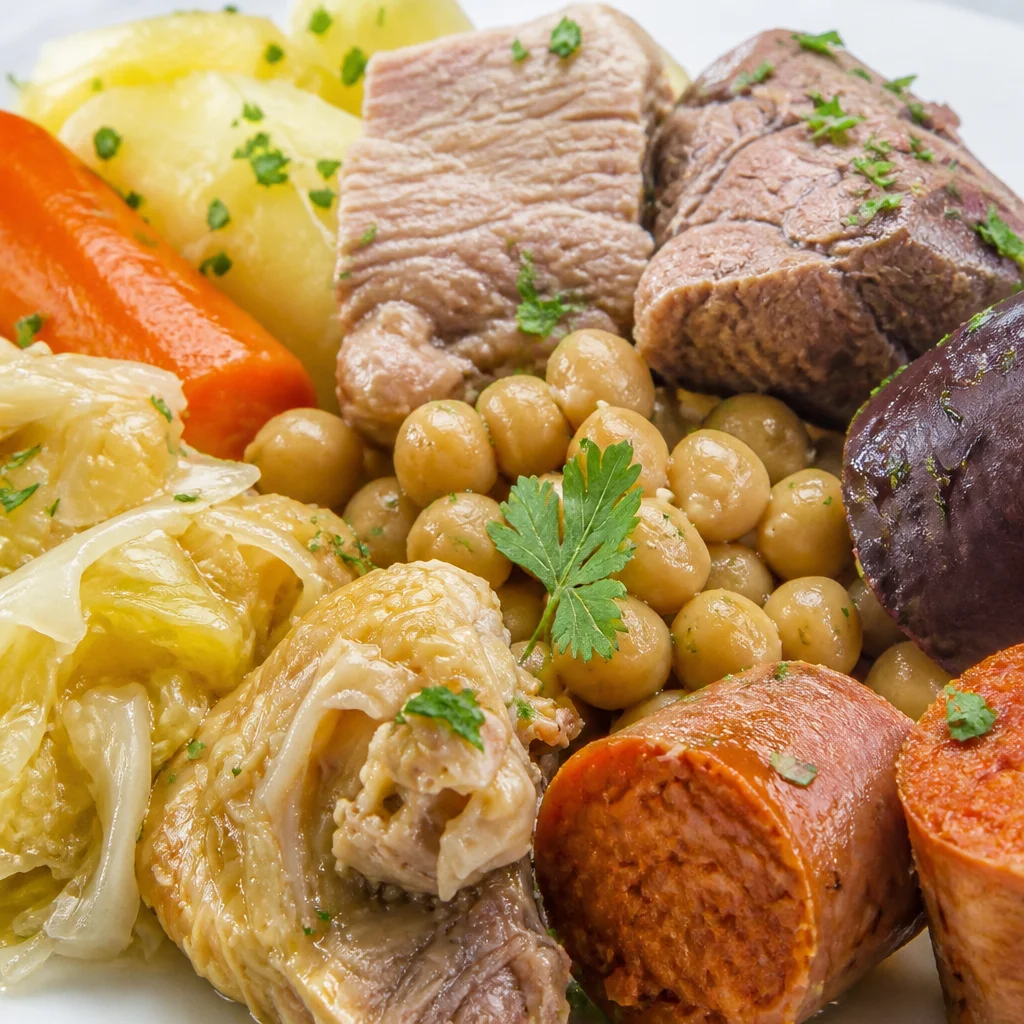
If you make Cocido Madrileño Tradicional Paso a Paso once, you’ll see why people get attached to it. It’s practical, it’s filling, and it makes your kitchen smell like something good is happening. If you want to compare versions, I like checking references like Cocido madrileño, receta tradicional y auténtica or the very approachable Receta de cocido madrileño tradicional – Directo al Paladar. Now grab your biggest pot, take it slow, and enjoy the process. You’ve got this.
Cocido Madrileño Tradicional
Ingredients
Method
- Soak the chickpeas the night before in plenty of water.
- In a large pot, add beef, pork, chicken, ham bone, onion, and garlic. Cover with water and bring it to a gentle boil.
- Skim the foam that rises for the first 10 to 15 minutes.
- Add the drained chickpeas. Lower the heat and simmer gently for about 1.5 to 2 hours.
- After about an hour, add carrots. Add potatoes later, around the last 30 to 40 minutes.
- Add chorizo and morcilla near the end (last 25 to 30 minutes).
- In a separate pot, boil or sauté the cabbage until tender.
- When everything is tender, turn off the heat and let it rest for 10 minutes.
- Serve the broth as soup (often with thin noodles), then chickpeas and vegetables, followed by the meats.